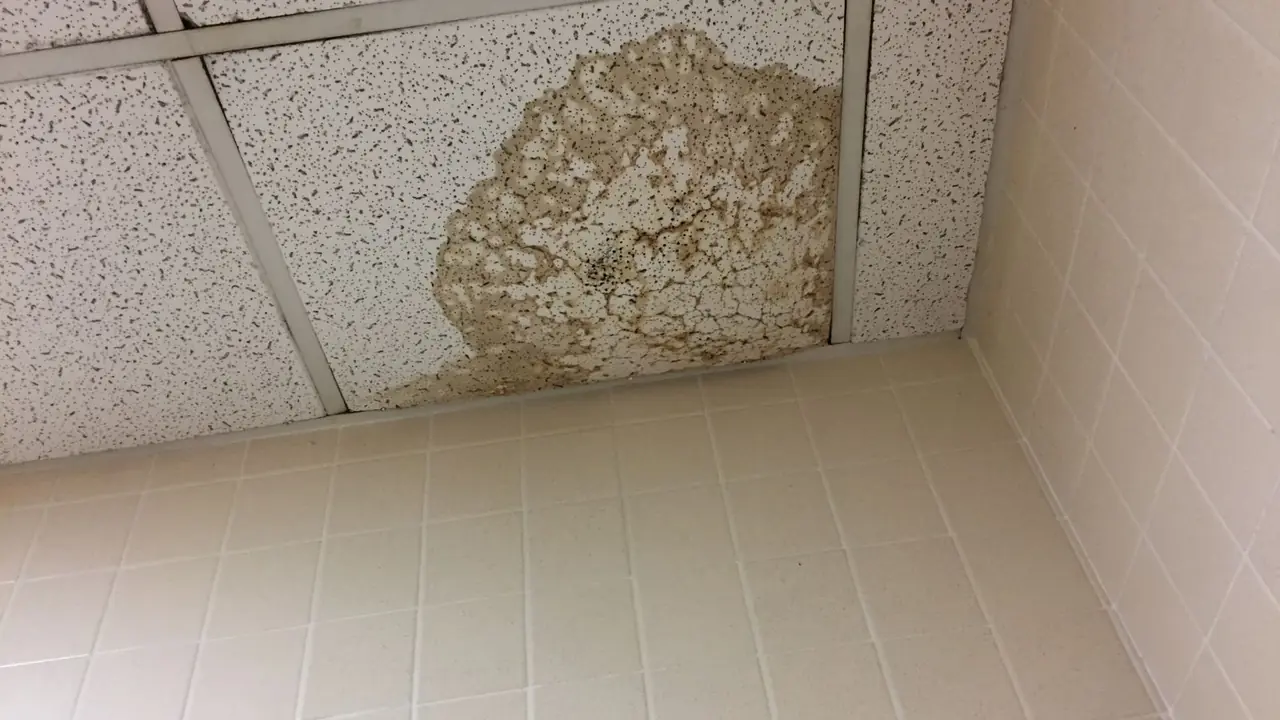
A wet ceiling is a symptom, not the problem
Ceiling water damage is what you see when water has already traveled through a floor, a wall or a roof. The stain is rarely the leak itself. It is the lowest point where the water showed up, so the source can be several feet away.
If the ceiling is dripping or bulging now, your first job is to limit the spread: move belongings, shut off the supply you can reach, and call for help. If it is only a stain, the job is to find out whether the leak is still alive. The sections below sort the signs by urgency and explain who to contact.
Signs that tell you how urgent it is
| Sign | Most likely cause | Urgency |
|---|---|---|
| Round yellow or brown ring | Repeated wetting from a slow plumbing or drain leak | Moderate. Find the source soon |
| Stain that darkens after showers upstairs | Shower pan, tub drain or supply line above | Moderate to high. Ask the upstairs unit to stop using it |
| Bubbling or peeling paint | Moisture trapped behind the paint film | Moderate. Check for a wet cavity |
| Bulge or sag | Saturated drywall holding water | High. Keep people away and call at once |
| Active drip | Open supply or drain failure | Emergency. Shut off water and call the 24/7 line |
| Musty smell with no visible stain | Hidden wet insulation or framing | Moderate. Needs a moisture reading |
The usual causes in apartments and condos
In buildings with shared floors, the most common source is not a roof. It is a bathroom, kitchen or laundry on the floor above. Failed supply lines on washing machines and dishwashers, worn toilet wax rings, leaking shower pans and clogged air conditioner condensate lines all show up as ceiling stains below.
A second group of causes starts outside: a failed window seal, a roof or balcony membrane that has aged, or a planter drain that backs up. These tend to leave stains near exterior walls and after rain, which separates them from plumbing leaks that follow water use.
A third group is easy to miss: sweating cold supply lines and ductwork. Condensation drips slowly for months, and the stain looks identical to a leak until a technician traces it.
Who is responsible: your unit, the unit above, or the association
Responsibility depends on where the water came from and on your building's governing documents. Water from a pipe inside the unit above usually leads to a conversation between that owner, their insurer and yours. Water from a shared line, the roof or the exterior generally points to the association.
Do not assume. Read your association rules, ask the building manager who handles shared systems, and ask your own insurer how it treats damage that starts in someone else's unit. We can describe what we find and document it, but we cannot decide fault, and no restoration crew should.
A fair rule of thumb
Stop the water first, document second, assign blame third. Arguments over fault can wait a day. Wet drywall cannot.
What to document before anything moves
- Wide photos of the whole room and close photos of the stain, with a coin or tape measure for scale.
- A short video that pans from the ceiling to the floor below it.
- The date and time you first noticed the damage and any water use upstairs around then.
- Names and contact details for the neighbor above and the building manager.
- Moisture readings and photos taken by your restoration crew, which they should supply on request.
Keep removed materials until your insurer or association says otherwise, unless they are contaminated or unsafe. A pile of wet drywall in a garage is annoying, but it is better evidence than a description.
Your first hour, in order
Protect people
Keep everyone out from under a bulging ceiling and away from any wet fixture or outlet.
Cut off the source if you can
Close the unit's main shut-off valve. If the source is above you, ask the neighbor or manager to close theirs.
Cut power to the wet area only if safe
Use the breaker panel only if you can reach it on a dry floor. Otherwise leave it and call the utility.
Protect belongings
Move furniture and electronics aside. Lift rugs. Put a bucket under a drip.
Call and document
Call a 24/7 line, then take your photos while the evidence is still in place.
If the water is spreading across a floor, our emergency water removal page explains how standing water is pulled out. For damp materials that need drying after the flow stops, see water damage cleanup.
If water is still coming through, call now and keep the line open while you shut off what you can reach.
Call (424) 550-5662Why empty units make a small leak a big one
A leak that runs for a day in an occupied home is usually noticed and fixed. The same leak in a unit that is vacant, rented seasonally or used as a second home can run for weeks. By then the ceiling below has absorbed water over many days, and the repair scope is larger.
If you own a unit you do not live in, ask a neighbor or manager to check it after storms and before long trips, and consider a leak sensor on the water heater and under sinks.
Marina Del Rey notes: a harbor of shared walls
The 2020 census counted 8,065 housing units in Marina Del Rey, and 49.1 percent of households had one person living in them. Dense buildings with many one-person homes mean more ceilings under other people's plumbing and more units that sit unattended during the day or while owners travel.
The practical step is to give a neighbor or your building manager a way to reach you, and to know where your unit's main shut-off valve is before you need it. For adjoining coverage areas that share this housing pattern, see our pages for Playa del Rey and Culver City.
Frequently Asked Questions
No. Condensation on cold pipes or ductwork, an old roof or balcony leak that has stopped, and even smoke or soot staining can mark a ceiling. A moisture meter reading tells you whether the area is wet now, which is the question that matters.
Compare the stain to a pencil outline drawn around it, and check again after a few days of normal water use upstairs. A moisture meter is more reliable, because a ceiling can be wet without growing visibly.
Only to relieve trapped water, and only with the area clear of electrical risk and with a bucket and tarp ready. Many people prefer to leave that to a crew, because a saturated panel can drop all at once.
Contact the building manager or association and put the request in writing with your photos. They can enter shared plumbing and, under many governing documents, arrange access to a unit when a leak is causing damage.
Yes. ANSI/IICRC S500 is the published standard for professional water damage restoration, and it sets drying goals based on readings from unaffected materials. A stained ceiling that looks dry can still hold moisture above it, so ask any company whether its crews work to S500 and whether it will show you the readings.
Indirectly. When fewer people are home, leaks go unnoticed longer. Marina Del Rey has many one-person households, so checking in on empty or rarely used units is a sensible habit for owners and neighbors.