The short answer: dry first, repair second
Ceiling water damage repair follows a fixed order. The leak is stopped, the wet drywall and insulation are dried or removed, the ceiling is rebuilt, and only then do primer and paint go on. Skipping straight to paint is the mistake that brings a brown ring back within weeks.
In Marina Del Rey many ceilings sit under another unit's bathroom or kitchen, so the source can be one floor up and out of your control. That makes the order of work even more important, because the repair has to wait until the water stops.
Our crews handle the drying stage through water mitigation and the rebuild through water damage repair. This guide explains what each step involves so you can read a scope of work and know what you are being asked to approve.
Stain, sag or hole: what the ceiling is telling you
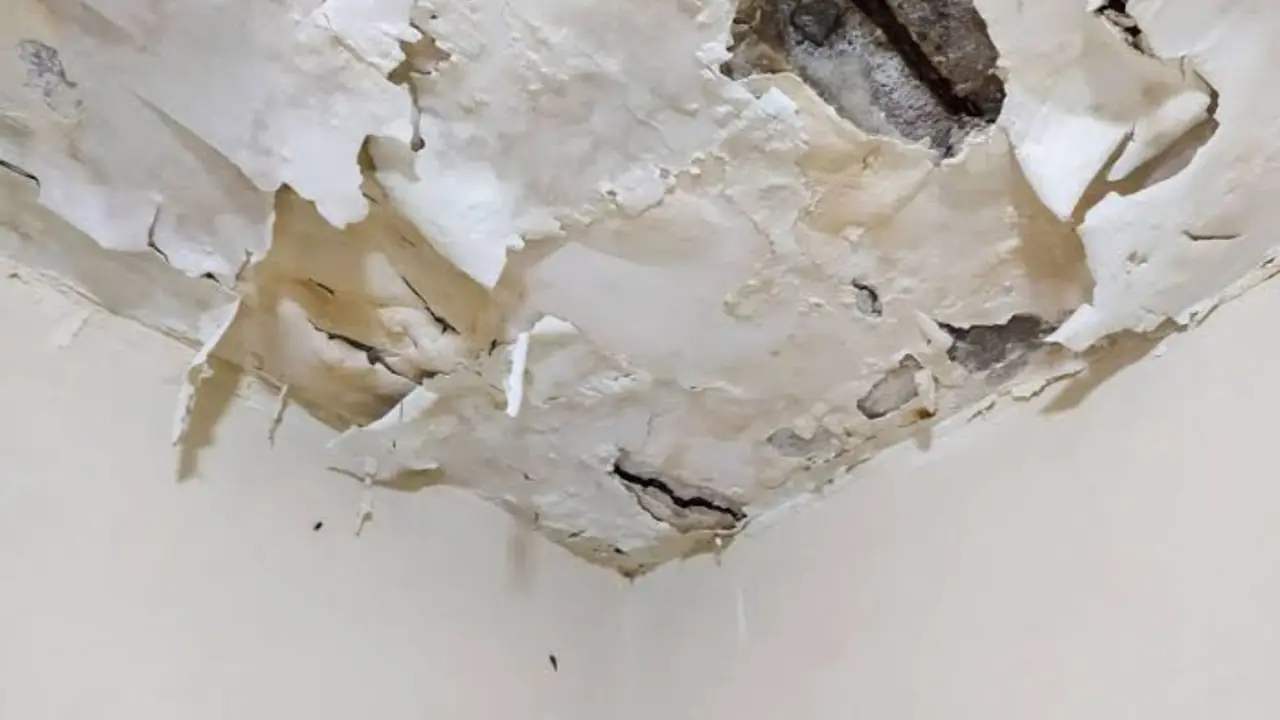
How a ceiling looks tells you how much water it has absorbed. A dry stain is the least urgent. A bulge or sag means the drywall is holding water and can fail without warning.
| What you see | What it usually means | Next step |
|---|---|---|
| Faint tan ring, dry to the touch | An old or one-time leak that has stopped | Confirm with a moisture meter, then prime and paint |
| Ring that grew since last month | A slow leak is still active | Find and stop the source before any repair |
| Soft spot or bulge | Drywall is saturated and may hold a pocket of water | Relieve the water safely, keep the area clear, call for extraction |
| Sagging panel or open seam | Fasteners and paper facing have lost strength | Do not stand under it. Plan to remove and replace the panel |
| Dripping light fixture | Water is inside the ceiling cavity near wiring | Switch off the circuit if the panel is dry and reachable, then call |
If water is reaching a light fixture or outlet, treat it as an electrical hazard first. Stay clear, cut power only if you can reach the panel while standing on a dry floor, and call the utility or 911 for any sign of sparking before calling a restoration crew.
The repair sequence from first call to final coat
Stop the source
A plumber closes the supply or repairs the line. If the leak is a roof or an upstairs unit, the building manager is part of this step.
Measure the moisture
Moisture meters and a thermal camera show how far the water traveled past the visible stain, since insulation and framing can stay wet long after the paint looks dry.
Dry or remove
Salvageable material is dried with air movers and dehumidifiers. Saturated drywall and insulation are cut out and bagged.
Confirm dry readings
Readings are taken again and compared with a dry reference point before anything is closed up.
Rebuild the ceiling
New insulation, drywall, tape and joint compound go in, followed by texture that matches the surrounding ceiling.
Prime and paint
A stain-blocking primer goes on first. Finish coats follow, usually across the whole ceiling plane so the repair does not show.
What gets cut out and what stays
A ceiling that was wet for a short time can often be dried in place. Plain drywall that has stayed wet for days loses its paper facing, swells and crumbles, and it is replaced rather than dried. Wet insulation almost always comes out because it holds water against the framing.
Cuts are made larger than the stain. Crews follow the damp edge until the meter reads dry, then square the opening so the new panel fits cleanly. A small stain on the surface sometimes turns into a much larger opening, which is the reason a moisture reading beats a visual guess.
Why stains come back through fresh paint
Ordinary wall paint is water based and lets the stain bleed through. A stain-blocking primer seals the stain before the finish coat goes on. If the stain returns after priming, the usual explanation is that the cavity above was never fully dry or the leak is still active.
Painting only the patch also leaves a visible square, since new paint and old paint age differently. Painting the full ceiling plane, edge to edge, hides the repair and costs little extra once the room is already prepared.
Texture, trim and the details people notice last
Texture is the part that gives away a poor repair. Knockdown, orange peel and smooth finishes each need a different technique, and a patch that does not blend will catch the light every evening. Ask how the texture will be matched and whether sample boards are available before the work starts.
Crown molding, recessed lights and smoke detectors that were removed during the repair should be reinstalled and tested. Confirm that the scope of work lists them, because they are easy to forget.
If you can see a stain and are not sure whether it is active, we can walk you through what to look for before you decide on a repair.
Call (424) 550-5662Permits: when a ceiling repair needs one
Many ceiling patches are cosmetic and do not involve a permit. A repair that opens walls, touches wiring or alters framing is a different case. Permit rules vary by jurisdiction and by scope, so ask the building department that covers your address before work begins.
A written scope that separates drying, rebuild and finish work makes that conversation easier. It also helps if your association or insurer asks what was done.
Marina Del Rey notes: which office answers your permit question
Marina Del Rey is an unincorporated community of Los Angeles County, surrounded by the City of Los Angeles. For unincorporated addresses, Los Angeles County Public Works Building and Safety handles permits, plan review and inspection, and its headquarters is in Alhambra. Before a ceiling rebuild that involves anything beyond drywall and paint, confirm whether your parcel sits in the county or inside the city.
A short drive northwest, Venice is inside the City of Los Angeles, where the Department of Building and Safety runs permits online through PermitLA and ePlanLA and requires inspection at each stage before work is covered. That second point matters for ceilings: the opening must stay accessible until the inspector signs off, so ask your contractor to schedule around it. Our Venice service area page covers the neighborhood, and the same question applies in Playa Vista.
Frequently Asked Questions
There is no fixed number of days. Drying ends when moisture readings match a dry reference, and that depends on how much water got in, what the materials are and how much airflow and dehumidification are running. A crew that quotes a day count before measuring is guessing.
You can, but only after the source is fixed and the area reads dry. Use a stain-blocking primer, not regular wall paint, and expect to paint the whole ceiling so the patch does not show.
Usually not. Only the wet or weakened sections come out, and the opening is squared so a new panel can be taped and textured to match. A fully saturated ceiling over a large room is the exception.
That depends on your association rules and each owner's policy, so read your governing documents and ask your insurer. Document the damage with photos and dates before anything is moved, since both sides will want to see it.
The drying step before repair does. ANSI/IICRC S500 describes how professionals confirm that wet materials are dry before they are closed up. Repair work then follows normal building practice and any permit rules for your address, so ask the building department what applies.
Start by finding out whether your parcel is in unincorporated Los Angeles County or inside the City of Los Angeles. County Public Works Building and Safety serves unincorporated communities, while the Department of Building and Safety serves the city. Ask the correct office whether your scope needs a permit.