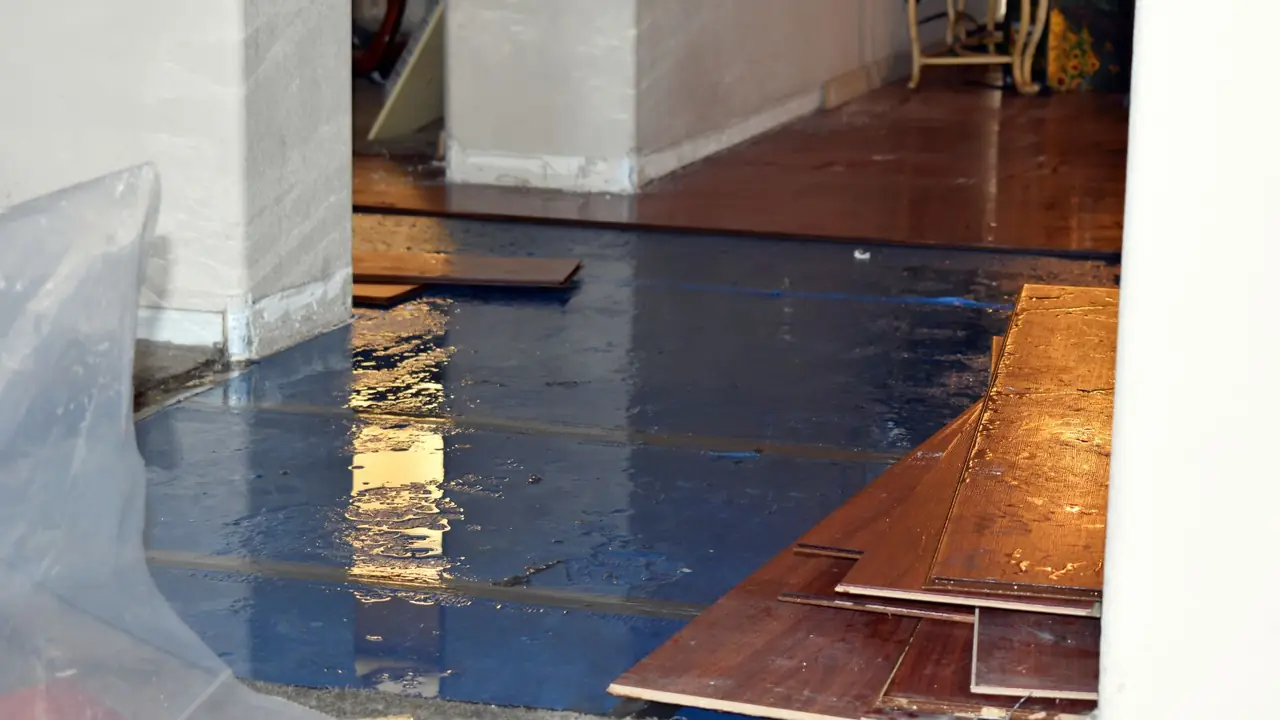
The first 48 hours decide how much floor you keep
Wood absorbs water through its edges and underside, then swells, cups and darkens as it holds moisture. The fix depends on how long the boards stayed wet, what kind of water reached them, and whether the subfloor stayed wet too. A floor dried within a day or two often needs only light refinishing. A floor left damp for a week usually needs boards pulled.
In a Marina Del Rey condo, the water often comes from a dishwasher line, a water heater, a toilet supply or a neighbor upstairs. Stop the source first, then work through the steps below in order.
Stop the water and remove the standing layer
Shut off the supply, soak up puddles with towels or a wet vacuum, and lift rugs, mats and furniture legs off the wood.
Photograph everything
Take wide and close photos of the floor, the source and any affected walls before anything moves.
Move air and lower humidity
Run a dehumidifier and a fan across the surface, not into one corner, and keep windows closed on humid days.
Get moisture readings
A meter shows whether wood and subfloor are still wet. Surface dryness can hide wet material below.
Decide on removal
Boards that are loose, black, soft or lifting at the seams are rarely worth saving. Pull them early so the rest can dry.
Reading the damage: what can be saved
| What the floor looks like | What it suggests | Likely outcome |
|---|---|---|
| Slight shine change, no gaps or lifting | Brief surface wetting | Dry in place, clean and refinish only if needed |
| Edges rising and a bowl shape across boards | Moisture absorbed from below or edges | Dry slowly, then sand and refinish once readings settle |
| Gaps opening, boards lifting at the seams | Longer exposure and swelling | Remove the worst boards and dry the subfloor |
| Black stains or a sour smell | Water sat for a long time | Replace affected boards and assess for mold |
Water from a clean supply line behaves differently than water from a drain, a toilet bowl or a storm. Contaminated water means porous materials like wood and underlayment are usually removed and replaced rather than cleaned, so tell the crew where the water came from.
Sand and refinish, or replace boards
Sanding removes the finish and a thin layer of wood to level boards that have flattened after drying. It only works once the floor is truly dry. Sanding wet wood traps moisture under new finish and invites more cupping.
| Option | Best when | Watch out for |
|---|---|---|
| Sand and refinish | Boards are flat again, readings are normal and the wear layer is thick enough | Floors already sanded several times may have little wood left |
| Replace a section | A few boards are damaged and matching stain is possible | New boards can look different next to aged flooring |
| Replace the whole floor | Widespread damage, contaminated water or a wet subfloor | Cost and a longer schedule, since the subfloor must dry first |
Moisture readings: when is the floor dry enough
A technician compares readings on the damaged area with readings on a dry section of the same floor. The goal is to match that dry baseline, not to hit a number from a chart. Readings are taken on the surface, on the subfloor and sometimes at the wall base, because water travels.
Drying can take days and sometimes weeks for thick solid planks. Rushing with heat can split boards, so crews use controlled airflow and dehumidifiers. Our water mitigation service covers that drying stage, and the refinishing or board replacement afterward is handled through water damage repair.
Marina Del Rey notes: older floors and permits nearby
General reference sources describe Venice as a community of older bungalows and early 1900s multifamily buildings. Floors in houses that age may have been sanded and refinished more than once, which leaves less wood to remove. If you live in Venice, ask whoever inspects the floor to measure remaining thickness before you plan on a sand and refinish.
The City of Los Angeles Department of Building and Safety says permits go through PermitLA or ePlanLA, and each construction stage must be inspected before work is covered. If your repair means opening the subfloor or touching plumbing or wiring, ask LADBS whether a permit applies. Over in Santa Monica, the city runs its own permit center, so the answer depends on the address.
A realistic repair order
The order that protects the new floor
Stop the source, remove wet materials, dry the floor and the subfloor, confirm readings, repair or replace, then sand and finish. Skipping the drying confirmation is the most common reason a new finish cracks or cups a few months later.
What changes the cost of a wood floor repair
No honest number can be given before someone sees the floor. Several factors move the price up or down, and a good estimate explains each one in plain language before work starts.
- The size of the wet area and how far water traveled beneath the boards.
- Whether the water was clean, gray or contaminated.
- The species and thickness of the wood, and whether it is solid or engineered.
- The number of drying days and the equipment needed to reach a dry baseline.
- Whether the subfloor needs to be replaced or only dried.
- The finish, stain match and how many rooms must blend together.
Insurance may help if the loss was sudden and accidental, though gradual leaks are often excluded. Check your policy or ask your insurer, and keep photos, readings and the written scope for your records.
Ask for readings in writing at the start and at the end of drying. Those two sets of numbers show the floor is actually dry, and they give you something concrete to hand to an insurer, a landlord or a flooring installer later.
Not sure whether your floor is dry enough to refinish? Call the 24/7 line for an assessment.
Call (424) 550-5662Frequently Asked Questions
Often yes, if water is removed quickly and the boards and subfloor are dried before they warp permanently. Floors left wet for a long time, or exposed to contaminated water, usually need boards replaced.
Wait until moisture readings on the wood and subfloor match a dry section of the same floor. That can take days or weeks depending on the thickness of the planks and the humidity indoors.
Mild cupping often relaxes as the boards dry evenly. Boards that stay raised after drying are sanded flat. Boards that buckle or split are replaced.
Coverage often depends on whether the water event was sudden and accidental and on your policy terms. Gradual leaks are often excluded. Check your policy or ask your insurer, and keep photos and records.
ANSI/IICRC S500 is the published water damage restoration standard, and floor drying is guided by moisture readings compared with dry reference wood. Ask any company whether its crews work to S500 and whether it records readings for the floor and the subfloor.
It depends on the scope of work. Cosmetic board replacement may not need one, but opening the subfloor or touching plumbing may. Ask the Department of Building and Safety before you start.