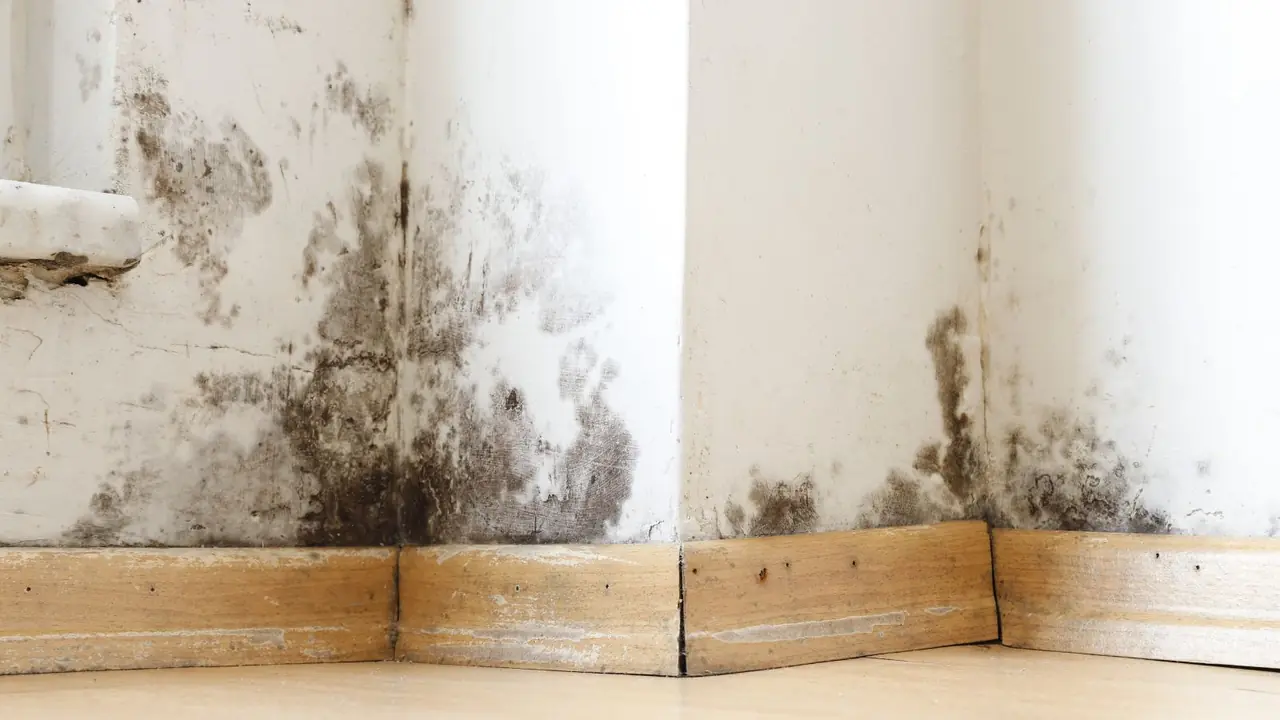
The short answer: mold in a wall is a moisture problem first
Mold needs moisture to grow. If you find it on or inside a condo wall, something is wetting that wall, whether it is a slow pipe leak, a failed seal, a condensation line or a neighbor's plumbing. Wiping the surface without fixing the water only treats what is visible.
Small, surface level spots on a hard, nonporous surface can sometimes be cleaned by a homeowner once the moisture is gone. Mold that sits inside drywall, behind baseboards or across a large area is a different job. It is removed with containment and the affected material is cut out. Our crews handle that work as part of mold remediation.
How mold ends up inside a wall
Drywall has a paper face that holds moisture and feeds mold. A leak from a shower valve, a toilet supply line or an ice maker line can wet the back of a wall for weeks without a drop on the floor. Warm, still air in a closed cavity completes the conditions.
Shared-wall buildings add another layer. A cavity may connect to plumbing that serves several units, so the wet area can sit on the far side of the wall from where you see the problem. A musty smell in a hallway closet can trace to a bathroom you do not even use.
Wipe it, watch it, or call a pro
| What you find | Reasonable response | When to call a crew |
|---|---|---|
| Small spots on tile, glass or sealed surface | Clean after fixing the moisture | If spots return within weeks |
| Spots on painted drywall in a bathroom corner | Check for a leak or ventilation problem | If drywall is soft or the spots are spreading |
| Dark patches behind furniture on an exterior wall | Move furniture, check the window and wall for moisture | If the area is larger than a few square feet |
| Musty smell with no visible growth | Look for the source with a moisture meter | If a meter shows moisture in the wall |
| Growth on both sides of a wall or in several rooms | Stop and do not disturb the area | Right away, before the spores are spread |
The reason for the last row is practical. Sanding or scraping dry mold sends material into the air and into other rooms, which is how a small area turns into a larger one. If you are unsure, leave it alone and call.
Step one is always the water
No mold removal lasts if the wet source is still active. A plumber closes the leak, or the association repairs the shared line, before anyone opens the wall. In a condo, that often means a conversation with the manager and sometimes a neighbor.
Once the source is fixed, wet areas are dried. Our water mitigation service covers moisture mapping, air movers and dehumidifiers, so the wall is dry before it is rebuilt. Closing a wall over damp framing gives mold a second chance.
What removal looks like when it is done right
Assess and map
Moisture meters and visual checks outline the affected area, including areas you cannot see. Testing may be recommended to guide the scope.
Contain
Plastic barriers, negative air and sealed doorways keep disturbed material inside the work area.
Remove affected material
Porous materials such as drywall and insulation are cut out and bagged. Framing is cleaned and dried.
Clean the air and surfaces
HEPA vacuuming and damp wiping follow. Air scrubbers run during the work.
Verify
Moisture readings are checked again. Independent clearance testing is sometimes arranged when a lender, landlord or buyer asks for it.
Rebuild
New drywall, paint and trim are installed, often as a separate step by a repair crew.
Ask whether the company works to the published ANSI/IICRC S520 standard for mold remediation. You can ask any company that question, and the answer should be clear.
Closets, baseboards and the spots people forget
Closets are a repeat offender because they hold clothes close to an exterior or plumbing wall with little airflow. Pull a few items away and look at the bottom of the wall and the baseboard. A bulging baseboard or a line of discoloration along the floor usually means moisture traveled along the framing.
Check behind headboards, bookcases and large wall art as well. Anything that sits flat against a wall for months can hide a growing patch.
If you can see growth on drywall or smell mold without finding a source, call before you disturb the wall.
Call (424) 550-5662A note on health questions
We do not diagnose or give medical advice, and no visual check can say what a particular mold means for a particular person. If anyone in the home has health concerns related to the indoor environment, speak with a physician, and tell your contractor about any sensitivities so the work is planned around them.
Marina Del Rey notes: built on a former salt marsh
Before the harbor was developed, the land was a salt marsh fed by Ballona Creek. Today the harbor has eight basins separated by six strips of land, and most buildings stand close to water on at least one side. Proximity to water is not proof of a moisture problem inside your unit, but it is a reason to take a musty smell on an exterior wall seriously.
The practical step is to check exterior walls, window sills and closets near the basins at least once each season, and to ask your manager how often the building's roof, windows and balcony seals are inspected. If you live in the adjacent Venice or Playa del Rey neighborhoods, the same seasonal check applies.
Frequently Asked Questions
Small surface spots on sealed surfaces can sometimes be cleaned once the moisture is fixed. Mold that has penetrated drywall or covers a larger area is usually handled by cutting out the material under containment.
Not always. A visual and moisture assessment is often enough to define a scope. Testing can help when the source is unclear or when someone, such as a lender or a buyer, wants documentation after the work.
Bleach on a porous surface does not reach the roots that sit inside the material, and it adds moisture. Removing affected drywall and fixing the water source is the dependable approach.
It depends on your governing documents, the cause and your insurance. Document the damage, notify the association and your insurer, and keep records of every step.
Being near water is not the cause by itself. Mold needs a moisture source in the building. Because the harbor area was once marsh and many buildings sit beside basins, regular checks of exterior walls, windows and closets are a sensible habit.