The short answer: choose the company that measures
A good water damage drying company measures moisture before it sets equipment, tells you what it is using and why, logs readings until the structure is dry, and puts the scope and price in writing before work begins. A company that promises a number of days before measuring anything is guessing.
Drying is a technical process, and it is easy to do badly in a way that looks fine for weeks. Walls feel dry before framing is dry. Floors look normal while the subfloor holds water. The sections below help you separate real drying from the appearance of it.
What a drying job includes
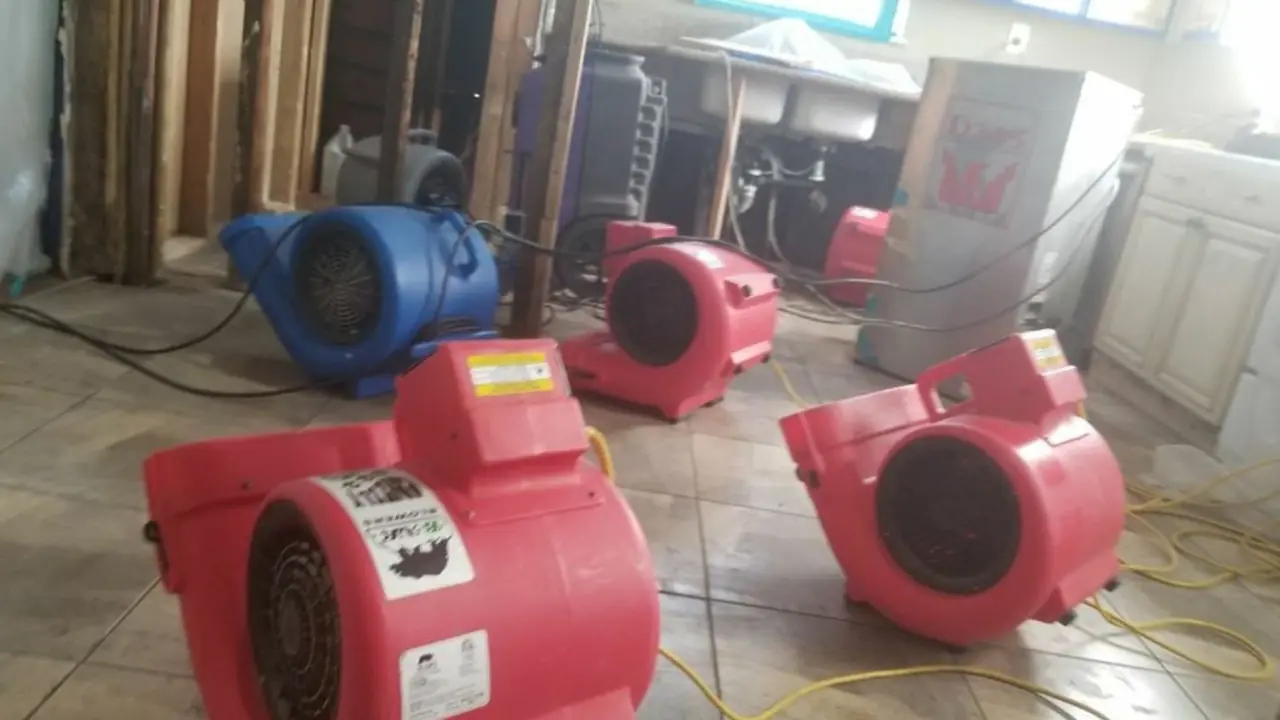
The work starts with water removal if any is standing. Then the crew maps which materials are wet, places equipment to pull moisture out of materials and air, and checks readings each day. They remove materials that cannot be saved, since drying ruined drywall wastes time.
It ends when readings in the affected materials match those in a dry reference area of the same building. At that point equipment is removed and the rebuild can begin. Our water mitigation work follows this sequence.
Equipment in plain words
| Equipment | What it does | What to ask |
|---|---|---|
| Moisture meter | Reads moisture inside drywall, wood and subfloor | Are readings taken at the start and every day |
| Thermal camera | Shows cool, wet areas behind surfaces | Is it used to find hidden moisture |
| Air movers | Push air across wet surfaces so water evaporates | How many and where, and why |
| LGR dehumidifier | Pulls moisture out of the air so drying continues | Is capacity matched to the volume of the space |
| Extraction unit or pump | Removes standing water and soaks carpet | Is water removed before drying equipment is set |
| Injection or panel system | Dries wall cavities and floor systems | Is it needed for this assembly |
You do not need to learn the names. You do need the company to explain each piece in a sentence, to show you where it sits and to tell you why it is there.
Questions to ask before you hire
- How will you measure moisture, and will I see the readings?
- What is your dry standard, and how do you set it?
- How many air movers and dehumidifiers will you use, and how did you decide?
- What materials will you remove rather than dry, and why?
- How often will someone check the equipment, and will the readings be logged?
- Will the scope and price be written and explained before you start?
- Do your crews work to the ANSI/IICRC S500 standard for water damage restoration?
Notice what is missing from the list: a promised drying time and a promised arrival time. A company that offers either before it has measured anything is selling comfort, not information. We offer same-day response when available, and we tell you what we find before we commit to a plan.
The drying log is your proof
A drying log is a record of daily readings, equipment placement and changes. It shows that wet materials reached the dry standard, and it supports an insurance claim or a later sale. Ask for a copy at the end of the job.
If a company will not show you readings, you cannot tell whether the structure is dry. Moisture left behind is the common starting point for mold, which is a separate and larger job.
If your floor, wall or ceiling is wet, call and we will explain how drying works and what it would involve at your address.
Call (424) 550-5662What your part of the job looks like
Before the crew arrives, clear the room if you can, take your own photos, and note when the water started. During the job, keep doors to the work area closed so air moves where the equipment sends it, and do not turn off equipment to save noise.
Check in each day. A crew that returns, reads the meters and adjusts equipment is doing the work. A crew that never comes back after setup is not, and you should call and ask why.
Red flags worth walking away from
Be cautious about a company that sets equipment without measuring anything, a company that pressures you to sign a document before explaining it, and one that insists on tearing out everything or nothing. Good crews make decisions item by item.
Equipment that runs for a day and disappears is another sign. Drying often needs several days with daily checks. A noisy house with no one checking readings is a house that is not being managed.
Drying after the water stops, and after the flood
Drying after a pipe leak differs from drying after a storm. A pipe leak is usually Category 1 water and can be dried in place. Stormwater and sewage are higher categories and involve removal of porous materials before drying starts. For those losses, see flood damage restoration and emergency water removal.
Marina Del Rey notes: newer districts and city permit counters nearby
In Playa Vista, redevelopment of the former Hughes Aircraft site began in the early 2000s, so most homes there were built within that period, and the district's parks and landscaping are irrigated with recycled water. Buildings of that age typically contain modern materials such as engineered flooring and laminate cabinetry, which react to moisture differently from older plaster and solid wood. Ask your crew which materials in your home are wet and how they dry.
For addresses in Culver City, the city's Building Safety Division operates from City Hall at 9770 Culver Boulevard. If drying leads to removing and rebuilding walls, ask that office whether your scope needs a permit. A drying company should be able to tell you which office applies and what documents it will provide.
Frequently Asked Questions
It depends on the amount of water, the materials and the equipment, so there is no honest fixed number. The structure is dry when readings match a dry reference area, and your crew should show you the log.
You can, but equipment without moisture mapping often leaves wet pockets. A professional reads moisture inside materials and adjusts equipment placement, which is the hard part. We do not offer equipment rentals.
Dehumidifiers and air movers run continuously to pull moisture out of materials. Heat from the dehumidifiers is normal. If the noise is a problem, ask your crew about the placement and schedule.
Often not for a small clean water loss, though noise and furniture moves can be inconvenient. For contaminated water or larger losses, crews may recommend leaving. Ask at the start.
It can be. Newer homes often use engineered flooring, laminate cabinets and sealed finishes that trap moisture, so crews check subfloors and cabinet bases carefully. The method is the same, but the readings and decisions differ by material.