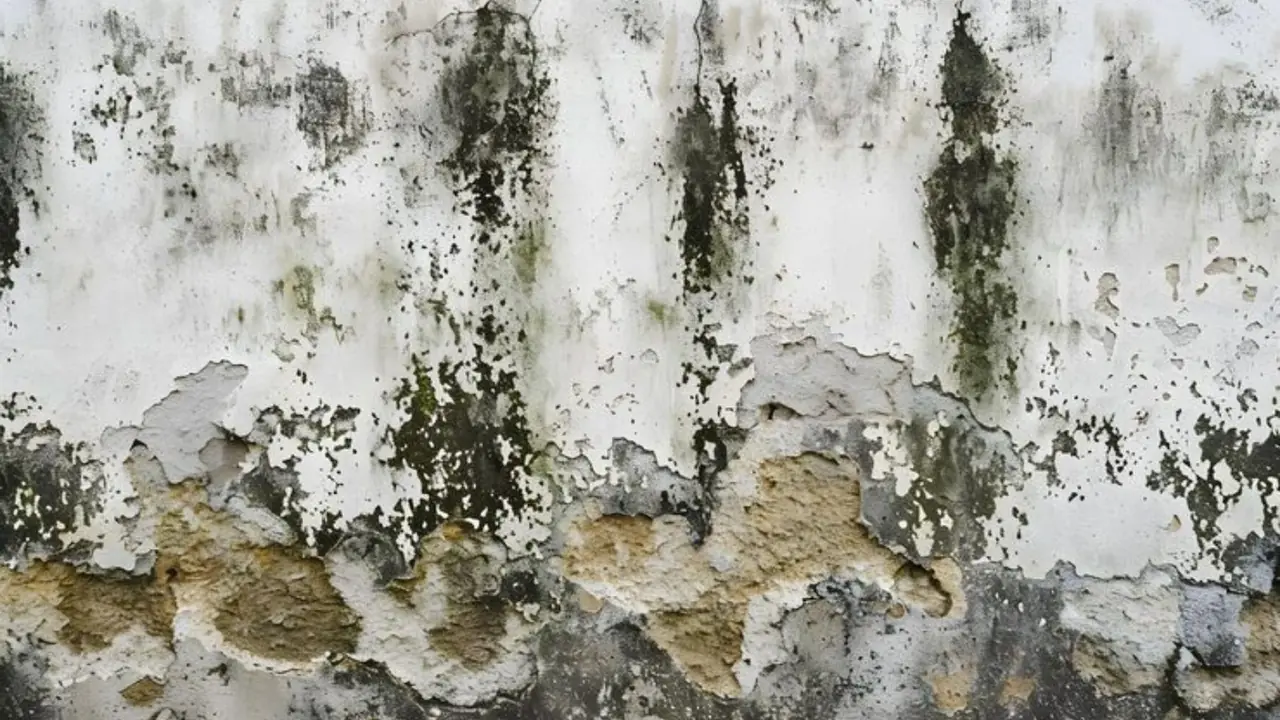
The honest answer about instant fixes
Nothing kills or removes black mold instantly. Sprays and wipes can change how a surface looks in minutes, but the growth, the stain and the moisture that fed it are separate problems. Any product that promises an instant result is selling the appearance of a fix.
Black is a color, not a diagnosis. Many kinds of mold look dark, and color alone cannot tell you which type is present or what it means for anyone living in the home. Questions about symptoms or sensitivities belong with a physician.
Common myths, checked
| Claim you may hear | What is closer to the truth |
|---|---|
| Bleach fixes any black mold | It may lighten surface stains on hard materials but does not reach into porous ones |
| If you cannot see it, it is not there | Hidden moisture inside walls and ceilings can support growth you cannot see |
| A home test kit tells you everything | Kits show that spores exist, which is normal, and rarely show how much or from where |
| Painting over it seals the problem | Paint hides the stain while moisture continues behind it |
Spores are present in ordinary indoor and outdoor air, so a positive kit result is not news. What matters is whether there is visible growth, a persistent smell or a moisture source that needs attention.
Surface growth versus growth into materials
Growth on tile or sealed surfaces sits on top, so cleaning can address it. Growth on drywall paper, wood, insulation or carpet can reach into the material. At that point the realistic options are removal and replacement, not another round of scrubbing.
A simple test is touch and appearance. If the material is soft, crumbles, bubbles or smells musty even after cleaning, the damage is deeper than the surface and a professional assessment is the right next step.
Questions to ask if someone suggests testing
- What question will the test answer, and what will we do with the result?
- Who collects the samples, and are they independent from the company doing the removal?
- Will air samples be compared with an outdoor sample taken at the same time?
- What does the report say about moisture, not only spores?
- Is testing needed for a sale, a loan or a landlord, or is a visual and moisture assessment enough?
Testing is a tool, not a cure. The published ANSI/IICRC S520 standard covers how remediation is planned and verified, and you can ask any company whether its crews work to it.
When to call
Call if the growth covers a large area, returns after cleaning, appears after a known leak, or sits on drywall, insulation or carpet. Call the same day if water is still entering. Our mold remediation page explains the steps, and once the area is dry and cleared, water damage repair rebuilds what was removed.
Marina Del Rey notes: newer buildings and recycled irrigation
Playa Vista redevelopment began around 2001, so much of the housing there is newer construction. Its parks and landscaped areas are irrigated with recycled water, according to general reference sources. If you live in Playa Vista, check that sprinkler heads and landscape beds do not spray against stucco or window frames, since repeated wetting at the base of a wall can feed hidden moisture.
Newer buildings are generally built tighter, so a hidden leak has fewer places to dry out. The same attention applies in Santa Monica condos, where a small plumbing leak behind a wall can go unseen for a long time. Ask your property manager for a moisture check if you notice a musty smell without any visible stain.
What to do tonight
Calm, practical steps
Do not scrub or sand the growth. Close the door to the room, stop any known water source and take photos. Wash your hands after touching affected materials. Write down when you first saw it, then call so the moisture can be found.
Test kit versus professional assessment
| Home test kit | Professional assessment | |
|---|---|---|
| What it examines | A sample of spores or a surface swab | The building, the moisture and the materials |
| What you learn | That spores are present, which is normal | Where moisture is, how far it spreads and what has to change |
| Next step offered | Often none | A written scope for drying, removal and repair |
Renters and condo owners
If you rent, tell the landlord in writing, attach photos and ask for a date. If you own a condo, find out whether the source is inside your unit or in a shared wall, roof or pipe. The answer decides who arranges the repair, and a clear paper trail helps either way.
While you wait, keep the area closed off, reduce humidity and avoid disturbing the growth. A restoration crew can stabilize the wet area so damage does not grow while the responsible party sorts out the repair.
Insurance and records
Policies treat mold differently, and coverage often turns on whether the cause was a sudden event or a long-running leak. Check your policy or ask your insurer. Keep photos, moisture readings, written scopes and receipts in one place so you can answer questions later.
A realistic timeline for a small, contained job
A contained job usually moves through assessment, moisture repair, setup, removal, drying and a final check. The pace depends on whether the source is found on the first visit and how long drying takes. Ask each step to be explained in plain language and ask for the schedule in writing.
If a company offers to start within minutes with no inspection, ask what the work will include. A crew that has not seen the space cannot know the scope, and a scope that is a guess usually changes midway through the job.
Finally, keep expectations honest. A good result is a dry building, removed or cleaned growth and a clear record of what was done. It is not a promise about the future, because moisture can always return if a new leak appears.
Dark growth on a wall or ceiling? Call the 24/7 line for a plain explanation of the next step.
Call (424) 550-5662Frequently Asked Questions
No. Surface sprays can change how a spot looks quickly, but removing the growth and fixing the moisture takes steps. Be wary of any promise of an instant result.
Color does not identify the type or the risk. Questions about health belong with a physician, while a restoration company assesses moisture and materials.
Spores exist in normal air, so a kit usually shows little. Visible growth, a moisture source and the condition of materials are more useful starting points.
On hard, sealed surfaces it can often be cleaned. On porous materials like drywall, insulation and carpet, removal and replacement is the usual path.
It can if sprinklers spray against stucco or windows over time. Adjust the spray, keep soil below the weep screed and report persistent dampness to your property manager.