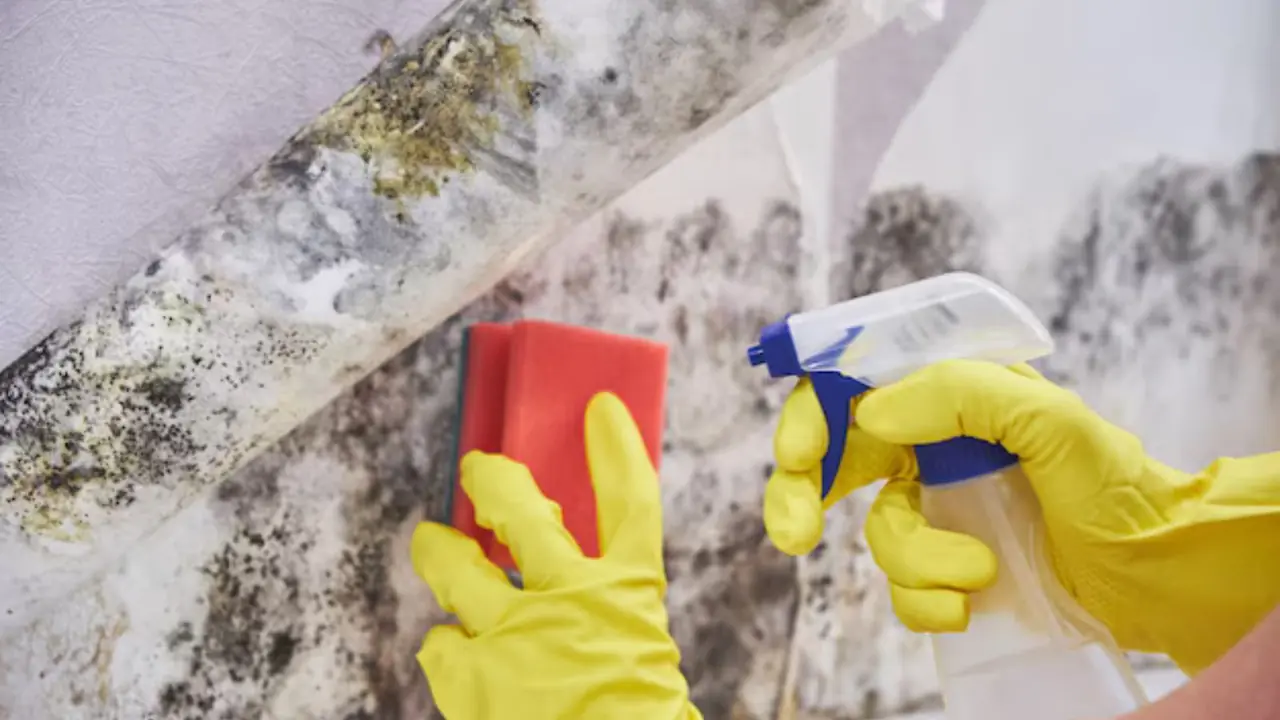
Killing mold is not the same as removing it
Many products claim to kill mold. Even when they work on the surface, dead mold can still stain materials and leave debris behind. For that reason, the goal in a home is usually to clean or remove the growth and then fix the moisture that fed it.
No single product is the answer for every surface. What works on a tile grout line will not help a soaked drywall panel, and what works on a small area may be the wrong plan for a large one. Match the method to the material and the size.
What works on different surfaces
| Surface | Reasonable approach | Limits |
|---|---|---|
| Tile, glass and sealed metal | Detergent and water scrubbing, then thorough drying | Grout may hold growth below the surface |
| Painted drywall, small spot | Damp wiping with detergent and drying, then fixing the cause | If drywall is soft or swollen, it should be removed |
| Wood framing | Cleaning and drying, sometimes with HEPA vacuuming or abrasive cleaning | Deep growth may need professional work |
| Carpet, padding, insulation, ceiling tile | Usually removed and replaced | Cleaning rarely reaches growth inside the material |
Vinegar, hydrogen peroxide and commercial mold cleaners each have a place on hard surfaces, and each has limits on porous ones. Read the label, test on a small hidden spot and keep the room ventilated.
Safety rules for any cleaner
Never mix cleaning products
Do not combine bleach with ammonia, vinegar or other cleaners. Mixing products can release hazardous fumes. Pick one product, use it as directed and rinse before trying anything else.
Wear gloves, eye protection and a well-fitted mask rated for fine particles, and open a window or run a fan that exhausts outside. If someone in the home has health concerns, ask a physician what precautions make sense.
Why moisture control is the real fix
Mold needs moisture. If the leak, condensation or humidity that fed it stays in place, the growth will have reason to return no matter what you apply. Fix plumbing leaks, repair roof or window seepage, run bath fans, empty condensate pans and keep closets ventilated.
- Fix leaks within a day or two, since materials left wet for longer are harder to save.
- Use a dehumidifier in damp rooms and keep indoor humidity moderate.
- Do not block vents or pack closets so tightly that air cannot move.
- Keep furniture a few inches off exterior walls.
- Dry shower walls and tubs after use, or run the fan for a while.
When to stop cleaning and call a professional
Stop and call if the affected area is large, if drywall is soft or wet, if the growth returns after cleaning, or if you cannot find the water source. Professionals use moisture meters, thermal cameras, containment and HEPA equipment, and their work follows the published ANSI/IICRC S520 standard.
If water is the starting point, the first priority is dealing with it through water damage cleanup. Once the area is dry, mold remediation addresses what remains.
What to do and what not to do while you wait
- Stop the moisture source first, because mold needs water to keep growing.
- Do not mix cleaning products. Bleach and ammonia-based products can release dangerous fumes together.
- Do not scrub, sand or brush dry growth, and keep fans from blowing across it.
- Keep children, pets and anyone with health concerns out of the area, and take health questions to a physician.
Marina Del Rey notes: coastal wetlands and damp air
Playa del Rey was once wetland and dunes, and Del Rey Lagoon Park today covers about 14 acres with a shallow saltwater pond that is partly connected to Ballona Creek by an underground pipe. Living near water like that can mean damp air in some closets and bathrooms, so a dehumidifier and a working fan are practical habits for homes in Playa del Rey.
The same advice fits harbor-side units in Marina Del Rey and homes in nearby Venice, where buildings sit close to water and shared walls limit airflow. Check windows, closet corners and the base of exterior walls once a month during humid stretches, and fix small moisture problems before they spread.
Common household options compared
| Option | Where it fits | Honest limits |
|---|---|---|
| Detergent and water | Hard surfaces with light growth | Removes growth physically but does not address moisture |
| White vinegar | Small spots on nonporous surfaces | Needs contact time and does not reach inside porous materials |
| Hydrogen peroxide | Small spots on some hard surfaces | May discolor materials and is not a fix for soft or wet drywall |
| Bleach | Nonporous surfaces only | Never mix with other cleaners, and it does not reach growth inside porous materials |
| Professional remediation | Large areas, wet materials, repeat growth | Involves containment, removal and drying, so scope and price are set after assessment |
Cleaning a small bathroom spot, step by step
Prepare the room
Open a window or run the fan, put on gloves and eye protection and keep the door closed to other rooms.
Dampen first
Lightly mist the surface with water so debris does not float into the air.
Wipe and scrub
Use detergent and water on a cloth, working from the edge inward and bagging the cloth afterward.
Rinse and dry
Wipe with clean water and dry the surface fully, aiming airflow across the room.
Find the cause
Check the fan, the caulk, the supply lines and the wall behind. If the spot returns, call for a moisture assessment.
Keeping humidity under control
A small hygrometer shows the humidity in a room and costs little. Ask a technician what target makes sense for your home, because ideal levels depend on the climate and the building. If readings stay high, add ventilation or a dehumidifier.
Pay attention to the places air does not move: behind furniture, inside closets and along cold exterior walls. A few inches of clearance and an open closet door during humid weeks do more than most sprays.
If a spot keeps coming back in the same place after you have cleaned and dried it, treat that as information. Something is feeding it, whether a slow leak, a cold wall or trapped humidity, and a moisture meter will find it faster than another round of cleaner.
Cleaning has not solved it? Call the 24/7 line and describe where the growth keeps returning.
Call (424) 550-5662Frequently Asked Questions
Detergent and water with scrubbing is the baseline. Some people use vinegar or hydrogen peroxide for small spots, and the surface must be dried completely afterward.
Bleach can lighten stains on nonporous surfaces, but it does not reach growth inside porous materials and must never be mixed with other cleaners. Read the label and ventilate.
Drywall that is soft, swollen or repeatedly wet is usually cut out and replaced, because cleaning does not reach inside it.
A dehumidifier lowers moisture in the air and helps prevent growth, but it does not remove mold already present. Clean or remove the growth and dry the area.
Damp air near water can contribute to indoor humidity, but mold depends on moisture inside the building. Good ventilation and quick leak repair matter more than your distance from water.